

At some point, SEO became more complex than it has to be. Just the terms like keyword density, backlink profiles, core web vitals, are sufficient to get a beginner to abandon the website and never give it another look. In reality, it’s much less complicated. The SEO basics for beginners are just a few key concepts that are followed over a period of time.
When those things fall into place, then the more advanced jargon is clearer as well. Whether you’re a freelancer creating a portfolio site or a blogger seeking visibility in the search engine, this guide is all you need.
SEO Reality
SEO is an acronym for search engine optimization. It’s making your content more comprehensible to search engines such as Google. This makes it appear when somebody looks for something connected to your content. That is why it is important to understand SEO Basics for beginners.
People don’t tend to go to the second page of search results often. The better you rank, the more likely people are to discover your content. You won’t need to pay for ads or constantly promote it elsewhere.
Importance for Freelancers and Bloggers
A perfectly optimized website or portfolio, for a freelancer, can generate client inquiries without having to make an effort. A small business will search for “freelance graphic designer for small business” and contact you without you pitching.
SEO can be the entire growth engine for bloggers. The traffic from social media is more volatile. The blog post with a high rank on search engines can attract traffic for years, and with very little additional efforts.
Keywords Are Still the Foundation
Although there are tons of SEO tips out there, keywords are the foundation for practically everything. A keyword is just the term that somebody enters into a search engine.
The first step towards SEO basics for beginners is to choose the right keywords. They should align with what users are searching for, rather than what you think sounds appealing.
Finding Keywords Without Fancy Tools
Free tools such as Google’s autocomplete suggestions or the “People also ask” section show you what people are searching around a topic. When you type in a basic concept in the search bar, the suggestions that come up can be a good starting point to determine a good keyword.
Long Tail Keywords Are Easier to Rank For
General topics, such as ‘freelance writing’ are very competitive. More detailed terms, such as “how to begin freelance writing with no experience,” can be arranged for significantly, especially for less established sites lacking authority.
On Page SEO Basics
After selecting a keyword, you need to use it in a strategic way. But do not overuse it.
Title and Headings
The main word should be used within the title and in one of the subheadings. Titles and headers are important to search engines for determining the content of a page.
The First Hundred Words
Search engines and readers may have a short attention span. By using your keyword naturally in the first paragraph, you’re telling your readers right away what the content is about.
Meta Descriptions
This short snippet will be displayed below your title in search results. It doesn’t have a direct impact on rankings. A clear and compelling meta description can help boost click-through rates, which is equally as crucial in practice.
Image Alt Text
Descriptive alt text for images helps search engines understand what is in the image and makes it more accessible for users of screen readers.
Content Quality Still Wins
Search engines are much more adept at identifying valuable content, as opposed to keyword-heavy but useless content. This is the one SEO basic for beginners that is frequently overlooked.
Providing a clear and thorough answer to the readers’ question will outrank shorter and skinnier content. Even if it’s technically optimized to the teeth. There is more depth and usefulness than most first time campers would imagine.
Site Structure and Internal Linking
However, website structure has a greater impact on SEO than realized at first glance.
Internal Links
If you have articles related to each other, connect them together. Search engines will know how your articles are connected. Readers will stay on your site longer rather than bouncing after reading one article.
Simple, Clean URLs
Yoursite.com/freelance-invoicing-tips is a much more readable and understandable URL for readers and search engines. Rather than a long string of random numbers and letters.
Mobile Friendliness
The majority of search traffic is from mobile devices. If a site is not mobile-friendly or fast, it won’t do well no matter how good the content.
Backlinks, Explained Simply
Backlink is a link from other website to your website. This is a vote of confidence from search engines as other sites will be saying that your content is worth referring.
Don’t worry about this in the beginning. A handful of quality links from relevant websites through guest posts, partnerships, or content worth linking to is far less important than numerous low quality links.
SEO Basic Mistakes Beginners Need To Avoid
Adding keywords where they don’t fit or making them obvious to the reader will have a negative impact and search engines will find out. Another mistake that people make is neglecting the speed of their pages.
Nothing is worse than a website that doesn’t load quickly enough for visitors and search engines to see the content. Not publishing consistently is also a hindrance to progress. Search engines will prefer a site that’s updated and posting regularly as opposed to one which posts once and then sits for a few months.
How Long SEO Actually Takes
Many of the beginners give up here. SEO basics for beginners is not as complex as some people think it is. But it will not yield immediate results. In general, it will take several months for new content to become consistent in search results. Even longer for traffic to become consistent.
This is a normal phenomenon and it doesn’t indicate that something is faulty. Search engines must be able to crawl, index and compare new content with all other content in the search engine that’s competing for the same keywords.
A Simple Starting Checklist
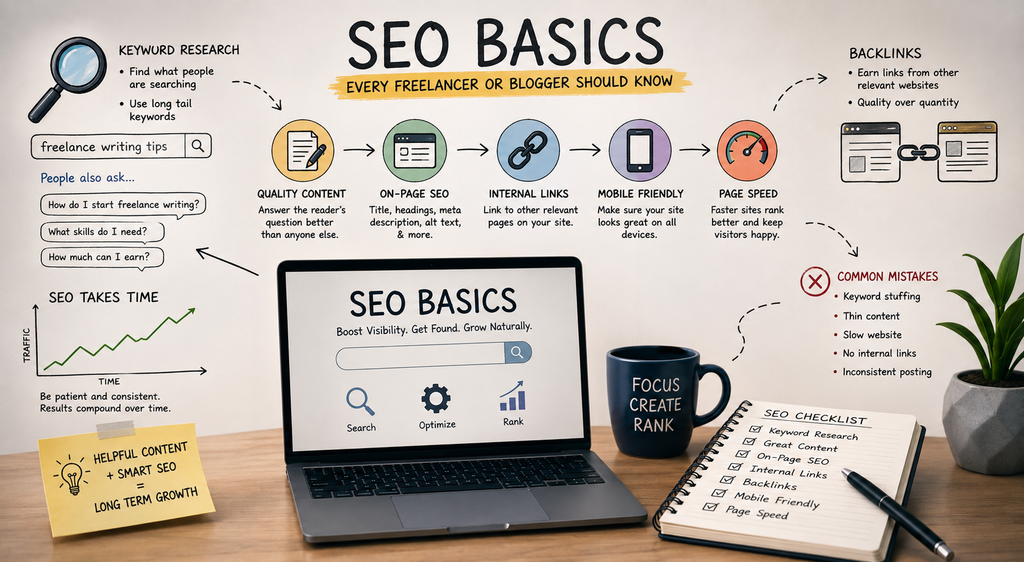
Choose one keyword per content; choose a keyword that people are searching for. Include that keyword naturally in the title, an early paragraph and at least one subheading. Don’t write to a word count, write to answer the reader’s question.
Don’t make URLs too long and cryptic. Connect to other pages where appropriate on your site. Each of these is a straight-forward step by itself. The results have come from learning how to do them one after another, article after article…
Where to Go From Here
From an outside perspective, SEO can sound daunting, primarily due to how much jargon is used on the web. However, at the core of all that noise it’s all rather basic. Write content that would actually benefit people, organize it in an easy-to-follow format and incorporate keywords. They might be used by a real person, not a marketer.
That kind of base is what will truly make freelancers and bloggers with a small beginning move the needle, not any advanced tactic.