
Freelancing provides you freedom. You select who to work with, the hours you’re willing to work, and the prices you’re willing to charge. However, one aspect of the work that befuddles even seasoned freelancers is getting paid. One of the most stressful things for those who work for themselves is late payments. Fortunately, most payment delays can be avoided. The right freelance invoicing tips can help you create a system that allows cash to flow and keeps client relationships running smoothly.
In this guide, you’ll discover effective, simple-to-implement invoicing strategies that you can use to get paid faster and easier.
Why Invoicing Matters More Than You Think
Invoicing is not just paperwork! It’s the link between your job and wages.
If you don’t have a robust invoicing procedure, it will be filled with confusion, delays, and awkward conversations. A good one creates trust and establishes clear expectations from the get-go.
Customers can tell when you take your invoicing seriously. It means that you are operating a serious business, not just a “side business”.
Set Clear Payment Terms Before You Start Work
All the top freelance invoicing tips converge to the same thought that is clarity first. Set up payment terms in writing, before starting any project. This is to keep both you and your client safe.
The payment terms should specify the following:
- Project cost or rate per hour
- Time of payment, for example 14 or 30 days after invoice date.
- Accepted payment methods
- Late payment fees, if applicable
- Up-front or deposit requirements
Include these words in your contract or your proposal. Use them again on each invoice. When expectations are established from the beginning, clients are much less likely to be late with payment.
Create Professional, Easy to Understand Invoices
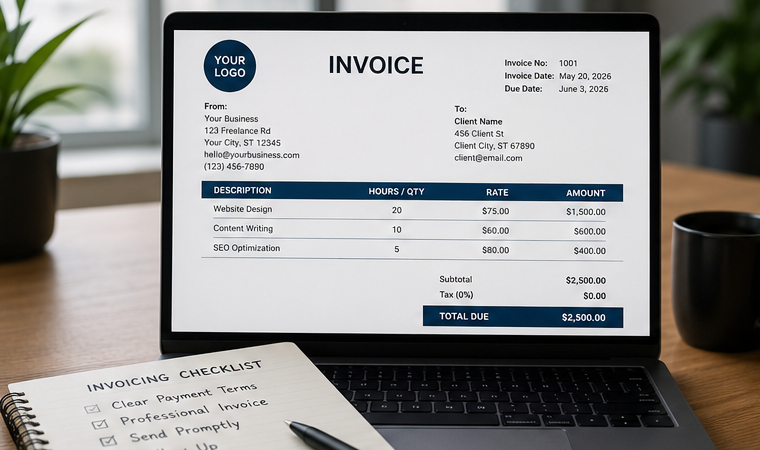
A confusing invoice leads to delays. An easy-to-understand invoice is processed fast. Every invoice needs to contain the following elements:
- Your business name and contact details
- Name of client and contact information
- Unique invoice number
- Date of the invoice and date due.
- Provide a description of the services provided.
- Costs and total cost of the item(s)
- Accepted payment methods
- Late fees (if applicable)
Don’t clutter the layout. An easy-to-understand and organized invoice makes for a better-looking and faster client approval.
Use Invoicing Software
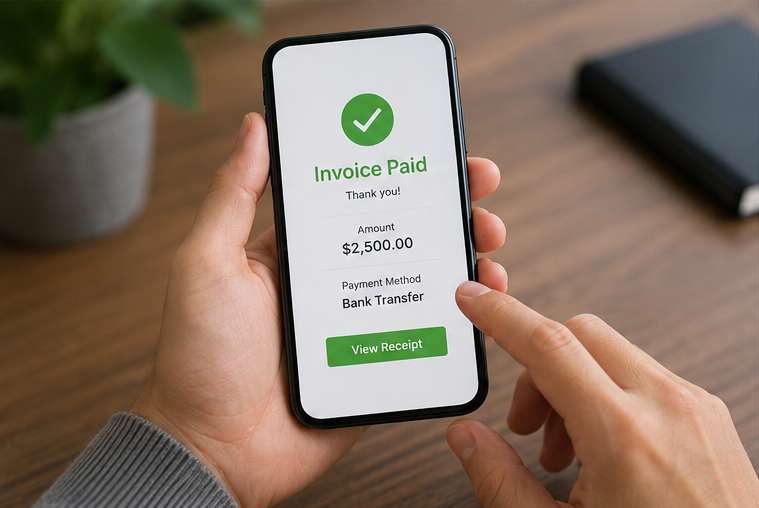
Doing manual freelance invoicing is fine, but it’s time-consuming and error prone, especially if you use a word processor. FreshBooks, Wave, QuickBooks, and Bonsai are just a few examples of the many tools that allow you to design branded invoices in a matter of minutes.
Most of these automation tools will also automatically send reminders, payment status updates and store your invoice history in a single location. This is one of the easiest freelance invoice tips and can save you hours a month.
Send Invoices Promptly
It is crucial to be on time as well as correct. Send your freelance invoicing as soon as the work is done or at the agreed time for the invoice. Don’t wait too long to invoice otherwise you will only be further delaying your payment.
Set a recurring invoice date if you work on retainer, or long term projects. For instance, send your invoice on the 1st of each month. It is consistent and makes it easier for your clients to plan for their payments and helps minimise the risk of your invoice being lost in their inbox.
Make Payment as Easy as Possible
The easier it is to pay, the quicker they will pay. Provide a variety of payment options. Be flexible on payment options.
- Bank transfer
- PayPal
- Debit or credit card
- Some payment tools, such as Stripe or Wise.
The less the customer has to do, the quicker you will be paid. Even better if your invoice also has a direct link for payment.
Avoid Unnecessary Complexity
Don’t ask clients to complete additional forms or contact you for payment details. All the information they need should be on the invoice.
Follow Up Without Being Awkward
Despite the terms being properly specified, some clients do not pay on time. This is normal and it doesn’t always indicate that something is wrong. A simple Follow Up Schedule is provided.
- Remind friend a few days prior to the due date
- If it doesn’t arrive by the due date, send a follow-up note asking for the payment (but be polite).
- Issue a follow-up remind the one week late
Use a professional and non-emotional tone. The majority of late payments occur due to oversight, rather than deliberate action.
Sample Reminder Message
“Hi [Client Name] – just a reminder, that invoice #1234 is due on [date]. Please reach out to me if there is anything I can do to assist you in getting this paid. Thank you!”
Messages such as these are short, clear, positive, and still allow things to progress.
Charge a Deposit for Larger Projects
On larger jobs, requesting a deposit will safeguard your time and your money. A typical structure is of the form:
- 30 to 50 percent advance before starting work.
- Remaining balance due upon completion or in scheduled installments
In this way you are cutting down on your financial risk. It also sorts out clients that are not cut out for the job. Late fees can be very effective in helping to motivate timely payment.
Use Late Fees to Encourage Timely Payment
Including a late fee clause in your contract provides an incentive to be punctual. The average late fee is 1-2% of the invoice amount per month. While it is not always necessary to enforce it, having a policy in place often allows delays to be avoided. The project must be clearly worded with this term from the beginning, not retroactive.
Keep Detailed Records
Keeping good records safeguards you in case of a payment dispute. For each project, keep records of the following:
- Signed contracts or agreements
- Issued Invoices and dates
- Payment confirmations
- Payment communication with the client
Most of the software used for invoicing is going to retain this information automatically, which will likewise make tax season and monetary preparing easier.
Know When to Pause Work
When a client repeatedly delays payments or fails to pay, it might be a good time to hold off on any further work until payment is made. This may be awkward, but it’s also a way to ensure a sustainable freelance business. Respecting your time is something that a good client will understand.
Final Thoughts
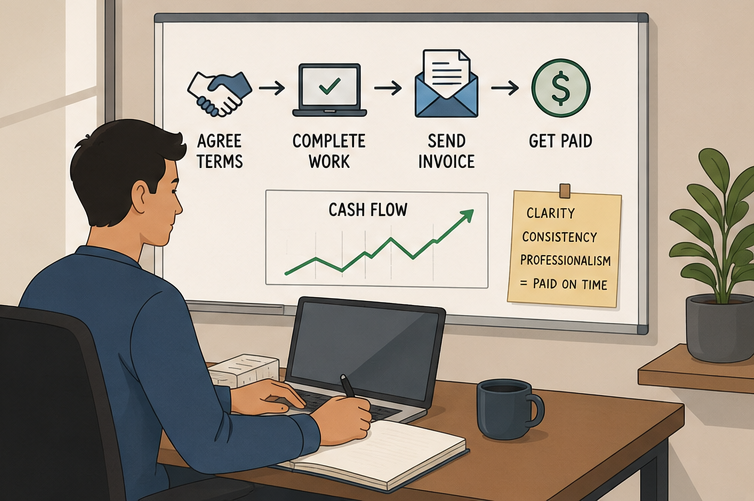
Timely payment isn’t something that one gets just by chance. It’s about simplicity and consistency with your invoicing process. Establish clear terms, send professional-looking invoices, provide convenient payment methods and follow up politely for your financial peace of mind and protection of your income.
These freelance invoicing tips are easy to put into practice and yet can have a tremendous impact. Before you make too many changes, try one or two at a time, like implementing an invoicing system or requiring a deposit, and gradually add more changes. A good Invoicing system is more than merely a tool to get paid. It enables that you run your freelance business confidently.