

In the field of knowledge there is a gap between knowing and doing, which results in a lack of income. There are many talented individuals never even think about imparting what they know, It is primarily because course creation seems more extensive and technological than it really is. In fact, the majority of people have enough information in their head already to create a digital course.
It’s not always a lack of know-how. It’s a clear framework for how to share that expertise. In a step-by-step way and can be followed by someone with no one else standing right by them, telling them what to do. This blog explains how to take what you know and mould it into an actual product that people will pay money to learn.
Why Now Is a Reasonable Time to Start
The technological aspect of the course has been much easier thanks to course platforms. No more coding a web site from scratch or working out payment processing issues yourself. A lot of that is done for you, so the bulk of the work falls on the content itself.
This is significant because one of the largest excuses people have for not getting started is eliminated. It’s no longer a technical issue. It’s just choosing to structure that which is known.
Determining What You Really Need to Teach
Starting from becoming specific to create a digital course that is helpful.
Look at What People Already Ask You
Recall the questions that you’ve been asked over and over again. At work, in your freelance work, or just among your friends. If a question is repeated, it means it is a real need for an answer. Typically the start of a course outline, without you even having to try.
Narrow the Topic Down
A topic of this nature, such as “how to freelance“, is difficult to capably teach in one course. Narrower angles work better, such as “how to get your first three freelance clients on Upwork“ gives the students a clear objective. They can achieve that objective, as opposed to some broad promise like “how to get a ton of clients on Upwork“.
Validating the Idea Before Building Anything
A very common error is to develop a complete course and then to find out that no one wants it.
Engage with Current Audience
If you have any kind of following, no matter how small, just ask them. What is bothering them in your field of interest. They are more likely to answer their questions correctly than to guess on your own.
Test With a Smaller Offer First
Don’t go full force to create a digital course. First test it out with a short course, paid guide, mini-series of lessons, etc. If they’re willing to pay for the smaller version, the full course is a far less risk.
Structuring the Course Itself
Early on structure is more important than production value. A course that is clearly organized and simply presented tends to be more successful. Rather than the one that is flashy but leaves students at a loss as to what to do next.
Start With the End Result
Make sure to know what students should be able to do at the end before describing individual lessons. It’s easier to determine what should be included in the course, and what shouldn’t, if you start from there.
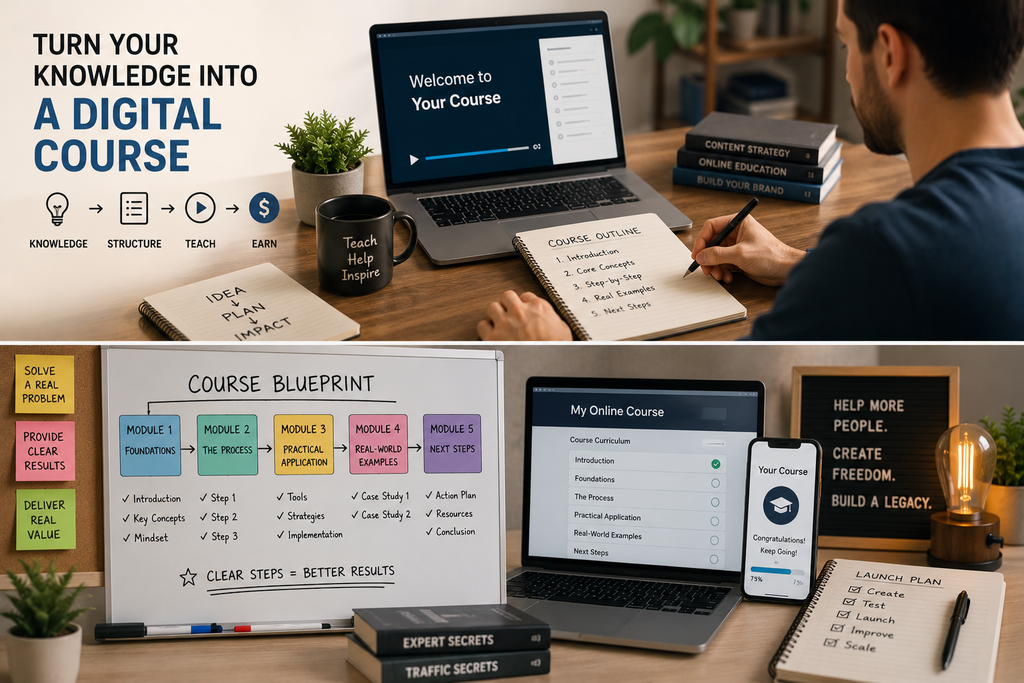
Break It Into Modules
Organize lessons around related concepts in “modules” that progress in a logical sequence. This provides students with a sense of progress. No long list of videos or lessons with no direction.
Focus Individual Lessons
One idea should be taught per lesson. Students overwhelmed by too much information in a lesson is not informed. Lessons are typically shorter, focused and easier to follow and complete.
Selecting How to Deliver the Content
There are several popular methods to create a digital course and it depends on you and the topic. Video lessons are suitable for visual or demonstration material like software tutorials or physical skills.
Written lessons, sometimes along with worksheets, work well with more conceptual or strategy oriented topics. Both are often best combined, allowing students to choose how they access the content.
Live elements, such as group calls or a private community, can be added on to the self paced material. They are not essential to building first a viable version.
Picking a Platform
There are a couple of platforms out there that provide options to create a digital course without having to be tech-savvy. Popular options include Teachable, Thinkific, or Podia, which are all capable of hosting, payments, and access to students in a single location.
If you already have an audience somewhere else, then simpler models such as a well-structured private membership area or even a structured set of downloadable content will be sufficient to get started with before building a custom platform.
Pricing the Course
Pricing is one area where more hesitation than is necessary occurs. A low price may not help the course sell, because sometimes a low price may imply low value to the buyer.
When you look at other courses in your niche, you have a good baseline to go by. From that point, price should be based on what the course offers, rather than the number of hours it took to put together.
Starting Without Overthinking It
People don’t complete a course because they wait until it’s exactly the way they want it to be. A small, solid version which actually aids students is much more useful than a perfect course which never sees the light of day.
A Simple Launch Approach
Let the people who already know you know about the course first. They are the most likely to be the first to buy. Provide a time-limited discount or bonus for the first students. It provids them a reason to buy it now instead of waiting forever.
Gather feedback from these initial students and use this feedback to enhance the course before a broader launch.
What’s Happening Post Launch
The course is just being created. The most effective creators keep on making enhancements based on actual student feedback and making adjustments to lessons. Also adding lessons that students positively responded to.
Marketing doesn’t end once the product is launched. Blogs, social media, email lists and word of mouth recommendations are all ways for a course to continue selling long after the launch excitement wears off.
Value of this Task
After you create a digital course, it is an asset that continues to work long after the building was completed. While freelance work is dependent on trading hours for dollars. A course can make money over and over with the same content.
Does not mean to say it automatically becomes completely passive. Ongoing effort is required for updates, support and marketing. However, a well created course is a kind of leverage that isn’t easily found in freelance or solo business work with each client or project.
Getting Started
The most effective approach is to choose a small first topic you’re familiar with, list a basic outline with a clear goal and then scale up. Waiting for the perfect idea or perfect plan can put off things much longer than beginning with what you know!